How brain function shapes behavior and why it’s so important to understand
For as long as humans have existed, mental health struggles have existed. What is new is not the struggle — it is our understanding.
Only in more recent decades have we begun to study the brain in depth and understand how trauma, chronic stress, depression, anxiety, ADHD, and post-traumatic stress physically alter its structure and functioning, among many other diagnoses. We are learning that behavior is not just personality. It is biology. And it is not always so easy to control.
And although our scientific knowledge has grown, our cultural understanding often lags behind. Far behind.
In many cases, mental health is still approached as something to suppress, silence, or quickly “fix.” Medication can be life-saving and necessary for many people — but it is not a universal solution. A pill alone does not rewire trauma long-term, teach emotional regulation, or restore safety.
For this post, I am focusing primarily on depression, anxiety, ADHD, and PTSD/CPTSD — the conditions I am most familiar with through lived experience and study. There are many other diagnoses that affect the brain, which I plan to continue researching and writing about in future posts. But today, I want to start with what I am personally affected by and can explain more clearly.
Also, it is impossible to fit everything that should be stated about this topic in a blog, even just for these diagnosis, so this is just a bit of education in a nutshell about affects on the brain. Plus, I think it may help the understanding in some of the following weeks topics.
To understand the struggle, we must understand the organ behind it. For each region, I am going to explain what each region of the brain is responsible for, how these mental health issues affect the brain, and how that in turn affects a persons daily life, often making it difficult to function. This is a lot of what I will be teaching in my workshops with Serene Efficiency, at least part of it. I believe understanding and educating is the first step to understand or have sympathy for someone else struggling.
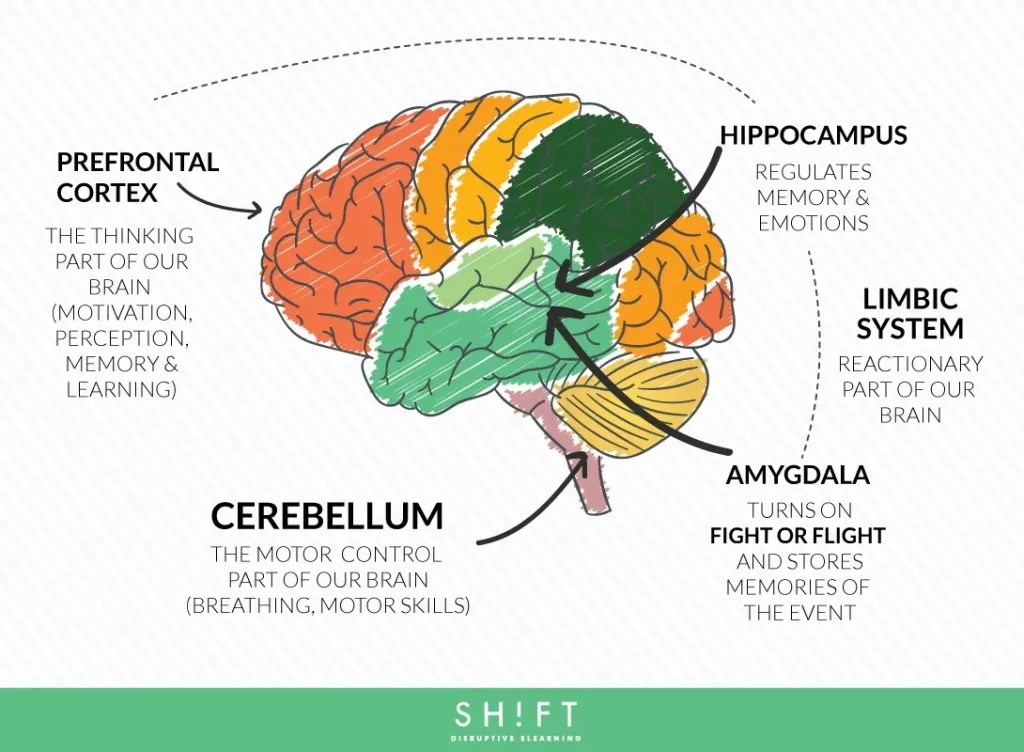
From what I have researched, there are 4 parts of the brain that will be discussed, as they are the main components of the brain that are affected by mental health conditions:
- The Prefrontal Cortex
- The Amydagala
- The Hippocampus
- The Limbic System
“If the brain were simple enough for us to understand it, we would be too simple to understand it.”
– Emerson M. Pugh


The Prefrontal Cortex
Main Purpose: Executive Function and Regulation
The prefrontal cortex sits at the front of the brain and is responsible for:
- Decision-making
- Planning
- Impulse control
- Emotional regulation
- Focus and attention
- Organization
This is the part of the brain that allows someone to pause before reacting, manage priorities, regulate tone, and think through consequences.
How Its Affected by Mental Health Conditions
- Depression can slow processing speed and reduce motivation.
- ADHD disrupts executive functioning, making organization and time management extremely difficult.
- Chronic stress and trauma reduce activity in this region, increasing emotional reactivity.
- PTSD/CPTSD can temporarily override logical thinking during triggers.
When this region is dysregulated, people may struggle to meet expectations — not because they do not care, but because the part of the brain responsible for organizing behavior is under too much strain.
At work, this can look like missed deadlines, difficulty prioritizing, or emotional reactions that feel out of proportion. In daily life, it may look like procrastination, mood swings, or feeling overwhelmed by simple tasks.
What is often labeled as irresponsibility is, in many cases, executive dysfunction.
Executive function challenges are often mistaken for disobedience, laziness, defiance, or apathy.
– Chris Zeigler Dendy, M.S.


The Amygdala
Main Purpose: Threat Detection and Survival
The amygdala is the brain’s alarm system. It scans constantly for danger and activates fight, flight, or freeze when it perceives a threat. This system is designed to protect us.
How It’s Affected by Mental Health Conditions
- Anxiety disorders can cause frequent false alarms to shoot off constantly.
- PTSD/CPTSD can make the amygdala hyperactive, reacting to reminders of past trauma as if they are present danger. And the smallest thing to one person may be extremely triggering to someone else.
- Chronic stress keeps this system activated for long periods of time.
When someone is living in this state, their nervous system is operating from protection, not logic. At work, this may show up as defensiveness, withdrawal, sensitivity to tone, or difficulty receiving feedback. In relationships, it may look like overreacting to perceived rejection or shutting down emotionally.
When the amygdala is in control, survival overrides connection, productivity, and long-term thinking.
“The amygdala responds to imaginary information in the same way it responds to a real situation, so anxiety brought about by thoughts and images created in the cortex is just as strong as the anxiety you will experience from a real and live situation or threat.”
– Matt Lewis


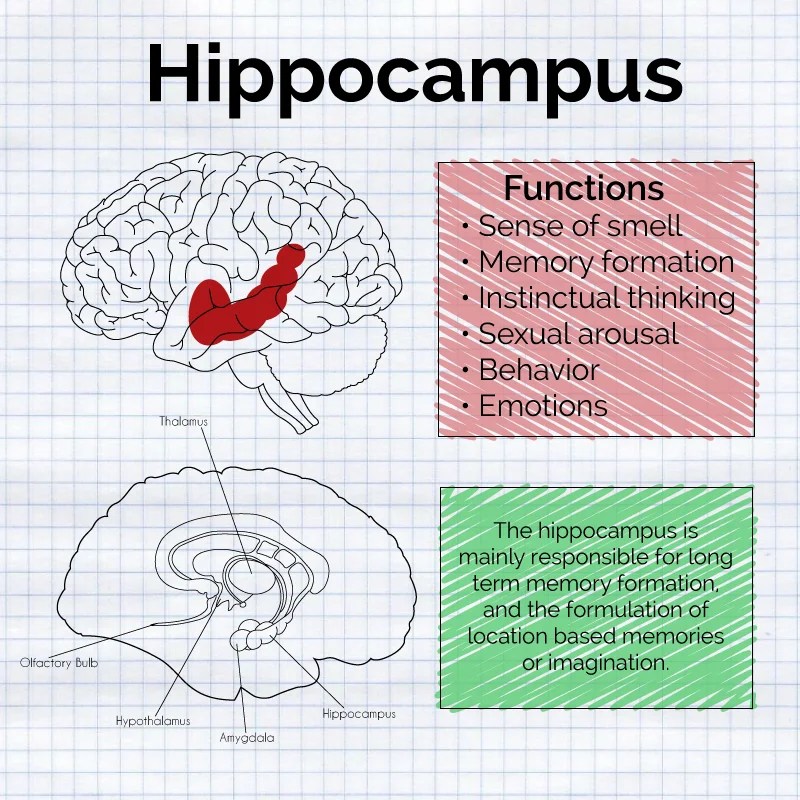
The Hippocampus
Main Purpose: Main Memory and Context
The hippocampus plays a critical role in memory formation and contextual processing. It helps the brain distinguish past from present and organize information effectively.
How It’s Affected by Mental Health Conditions:
- Chronic stress has been associated with reduced hippocampal volume.
- Depression can impair memory and create brain fog.
- PTSD/CPTSD can disrupt context processing, making past experiences feel current.
When this system is strained, individuals may struggle to retain new information, feel overwhelmed when learning something new, or experience cognitive fog. In short, brain fog is a term describing a state of cognitive dysfunction, mental fatigue, and lack of clarity (will be a recent topic that I write about).
In the workplace, this can mean slower onboarding or difficulty mastering new systems. Outside of work, it can mean forgetting conversations, losing track of commitments, or feeling mentally exhausted by tasks that once felt manageable.
This is not about intelligence. It is about neurological load.
“An evolutionarily primitive part of the brain, the hippocampus stores long-term memories. It also works like a GPS, enabling spatial navigation so we know where we are.”
– Barbara K. Lipska


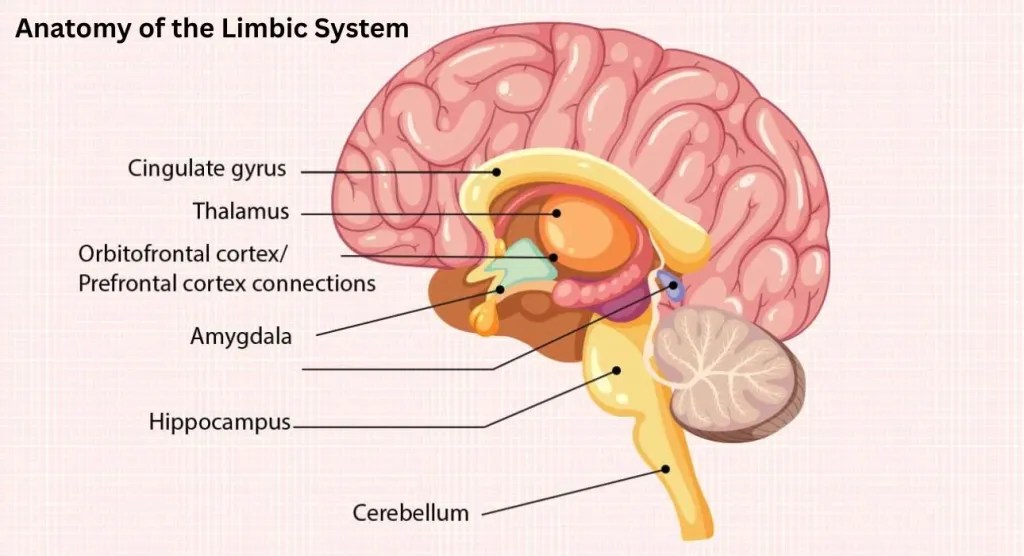
The Limbic System
Main Purpose: Emotion, Motivation, and Reward
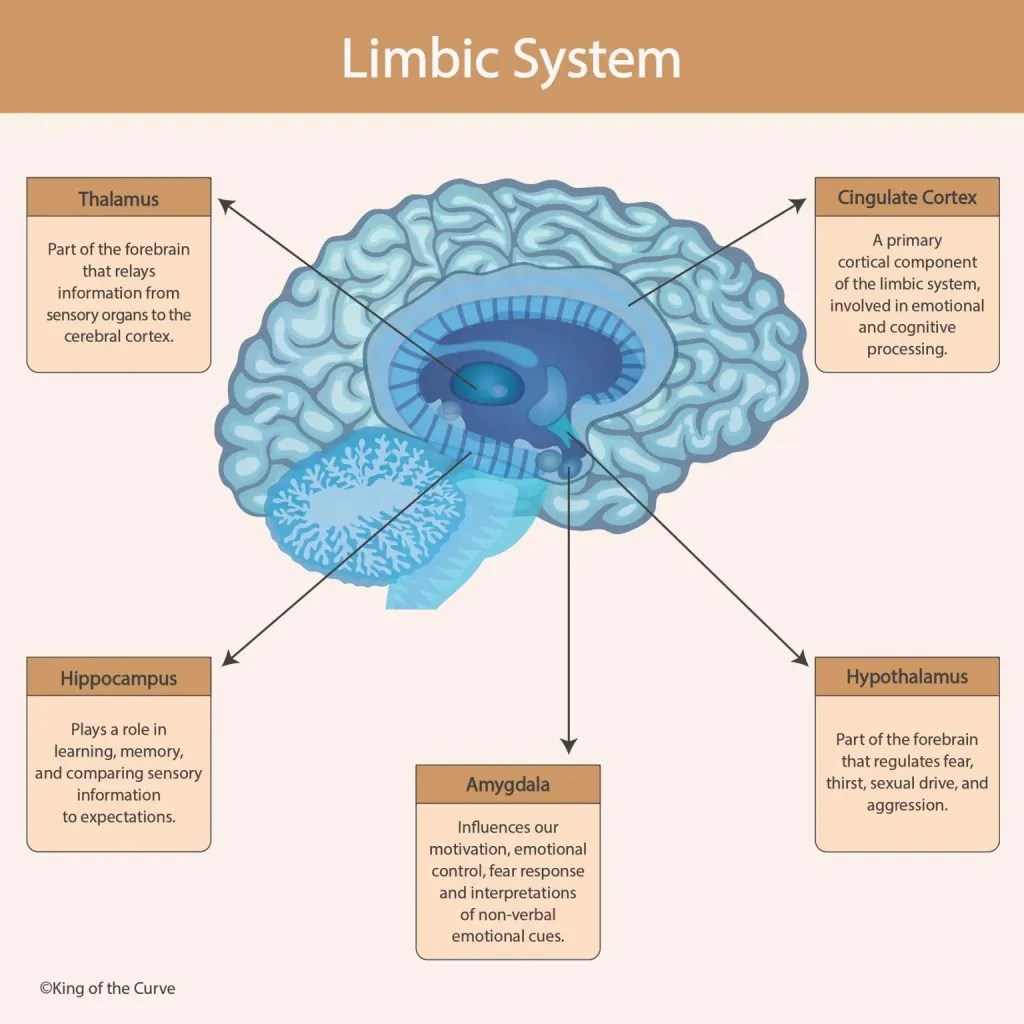
The Limbic System actually includes The Amygdala, Hippocampus, and cortex. It influences what feels meaningful, what drives us forward, and how we bond with others. The following is how the system is overall impacted.
How It’s Affected
- Depression can blunt reward processing, reducing motivation and pleasure.
- Addiction alters dopamine pathways, reshaping the brain’s reward priorities.
- Burnout and trauma can dysregulate emotional responses and trust.
When motivation declines, people are often told to “try harder.” But when the brain’s reward system is disrupted, effort does not feel the same.
At work, this may appear as disengagement or decreased productivity.
In daily life, it may look like isolation, loss of interest, or emotional numbness.
“The limbic system is responsible for anxiety itself, but the pre-frontal cortex provides the worry scripts, formulating potential problems. When our mind races and catastrophizes, that’s the pre-frontal cortex.”
– Catherine Gray

When There Are Multiple Diagnoses
Mental health conditions rarely exist in isolation. It is common for individuals to experience more than one diagnosis at the same time — depression and anxiety, ADHD and trauma, PTSD and depression, etc. (co-occurring disorders). When multiple conditions are present, the brain is not just managing one area of strain. Several systems may be under pressure simultaneously.
Someone with ADHD and anxiety may struggle with executive function while also experiencing a hyperactive threat response at the same time.
Someone with PTSD and depression may navigate both heightened survival reactions and diminished motivation at the same time.
Someone with trauma and ADHD may struggle with attention, emotional regulation, and memory at the same time.
The combination of ADHD, anxiety, and CPTSD (what I have been diagnosed with (in addition to depression) creates a “triple threat” to the brain, causing chronic activation of the amygdala (fear center), dysfunction in the prefrontal cortex (executive function), and reduced hippocampal volume (memory/regulation). This leads to severe chronic stress, a brain permanently stuck in “survival mode” constant emotional dysregulation, and intense difficulties with focus, memory, and impulsivity.
It is exactly how I have felt over the past several years now and it is extremely difficult to explain to other people, especially when it comes to work. It makes it seem like I am struggling when really I am in the best place I have been in my life. It doesn’t make me incapable, or incompetent, especially since diagnosed and treated properly. But I have learned that my brain now functions and communicates differently and I had to change my work style to fit that. But noticed that it is rare that managers are able to change their teaching style, which is very important in today’s world (why Serene Efficiency was created).
Here is a table that in an eggshell explains the affects with different combinations of mental health diagnosis:
| Combination | Brain Regions Affected | What Happens Neurologically | How It May Present |
| Depression + Anxiety | Prefrontal Cortex, Amygdala, Limbic System | Reduced executive functioning + heightened threat response + altered reward processing | Overthinking but low motivation; exhaustion; difficulty making decisions; emotional overwhelm |
| ADHD + Anxiety | Prefrontal Cortex, Amygdala | Executive dysfunction combined with chronic hypervigilance | Difficulty focusing due to both distraction and worry; avoidance; task paralysis |
| PTSD/CPTSD + Depression | Amygdala, Hippocampus, Limbic System | Hyperactive survival response + impaired context processing + blunted reward system | Emotional numbness mixed with reactivity; low motivation; difficulty feeling safe |
| ADHD + Depression | Prefrontal Cortex, Limbic System | Executive dysfunction + reduced dopamine reward response | Low drive, procrastination, difficulty starting tasks, shame cycles |
| PTSD/CPTSD + Anxiety | Amygdala, Hippocampus | Chronic threat activation + difficulty distinguishing past from present | Hypervigilance, irritability, sleep disturbance, heightened startle response |
| Trauma + ADHD + Depression | Prefrontal Cortex, Amygdala, Hippocampus, Limbic System | Executive strain + survival activation + memory disruption + reduced motivation | Cognitive overload, emotional dysregulation, inconsistent performance, extreme fatigue |
Obviously, there is a lot more to it, and there could be many more different combinations. Again, this is a very in an eggshell view. However, when several brain regions are dysregulated at the same time, coping requires significantly more energy.
What looks like inconsistency, especially from an employee with a good work history, is most likely just mental over load. Understanding co-existing mental health conditions shifts the question from:
“What is wrong with you?”
to:
“What systems are under strain right now?” and “What is causing the strain?”
And that shift reduces shame and allows the person to start working on how to work towards progress. And that progress leads to learning how to function in the world again. Understanding what is going on up there has helped me so much while I am experiencing symptoms, because I usually know what is going on and that it will pass. I am familiar enough with the feelings. Of course I am not perfect, but I am able to recognize the issue or what caused it (but it is not always obvious).
“More than half of people diagnosed with one psychiatric disorder will be diagnosed with a second or third. About one third have four or more.”
– University of Colorado Boulder


Closing: Understand the Biology Before Judging
We have spent generations judging people’s behavior without understanding the biology behind the science. When the cliche, “you never know what someone is going through”, it is quite literal.
The brain is not a moral compass. It is an organ. When it is overwhelmed, behavior shifts. When it is stressed, regulation decreases. When it is healing, it requires patience. Understanding what is happening inside the brain does not remove responsibility — but it does remove unnecessary shame. And when shame decreases, regulation becomes possible.
It is easier to cope with anxiety when you understand why your body is on high alert.
It is easier to manage depression when you understand why you just want to isolate.
It is easier to navigate ADHD when you understand why you can’t keep focus.
It is easier to process trauma when you recognize your nervous system is protecting you but overreacting.
Understanding your brain does not eliminate struggle. But it makes the struggle so much more easier to navigate, at least in my case. Education does not cure everything. But understanding changes everything.
If we want better mental health outcomes — in ourselves, in our families, and yes, even in our workplaces — we have to start by understanding the organ behind the struggle.
Thanks for reading and talk next week! Hope everyone has a happy and serene week!
“The advice I’d give to somebody that’s silently struggling is, you don’t have to live that way. You don’t have to struggle in silence. You can be un-silent.”
– Demi Lovato


Resources & Research
The concepts discussed in this article come from the following resources:
- American Psychiatric Association – Diagnostic and Statistical Manual of Mental Disorders (DSM-5-TR)
- National Institute of Mental Health (NIMH)
- Arnsten, A. F. T. – Stress and prefrontal cortex research
- McEwen, B. S. – Neurobiology of chronic stress
- Shin, Rauch, & Pitman – Brain function in PTSD
- Bremner, J. D. – Trauma-related brain changes
- Volkow & Morales – Dopamine and addiction pathways
- Drevets, Price, & Furey – Brain abnormalities in depression
This post is intended for educational purposes. It is not a substitute for medical advice or diagnosis.
Leave a Reply! I would love to hear your thoughts on todays topic!