
Content Warning: This article discusses emotional abuse, gaslighting, manipulation, coercive control, addiction, mental health, and the psychological effects of abusive relationships. Please read with care.
Emotional abuse is designed to undermine another’s sense of self.
It is deliberate humiliation, with the intent to seize control of how others feel about themselves.”
― Lorraine Nilon
Questioning Your Own Reality
Too often, people get stuck in situations where they are being controlled without even realizing it is happening.
Emotional abuse does not always begin with obvious threats or unmistakably cruel behavior. It can develop gradually, hidden within everyday conversations, repeated conflicts, convincing excuses, and behaviors that may not seem serious enough on their own. By the time someone recognizes the pattern, they may already be questioning their own memory, judgment, and feelings.
The CDC’s 2023–2024 National Intimate Partner and Sexual Violence Survey found that nearly one in three women and more than one in five men in the United States have experienced psychological aggression from an intimate partner.
Even those numbers cannot tell us exactly how often emotional abuse is happening. Many incidents are never reported or disclosed to anyone. People may remain silent because they are afraid, believe the situation is not serious enough, want to protect the person responsible, or do not believe anyone can help.
Emotional abuse can be especially difficult to measure because it may leave no physical evidence. Sometimes the person experiencing it does not recognize it as abuse until months or even years later.
There may not be one clear moment when everything changes. Instead, you slowly begin questioning conversations you were once certain about. You wonder whether you misunderstood, overreacted, or caused the problem yourself.
Eventually, you are no longer only questioning the other person’s behavior.
You are questioning your own reality.
“Gaslighting preys on self-doubt and fear, manipulating someone’s reality to maintain control.”
– Julia Lee
“Gaslighting destabilizes reality to maintain control, making individuals question their own perspectives.”
– Sven Peterson
What Gaslighting Actually Is
The word gaslighting is used so often now that it sometimes seems to describe any lie, disagreement, or situation in which two people remember something differently.
That is not what gaslighting means.
Two people can honestly remember the same conversation differently. When someone is extremely upset, anxious, overwhelmed, triggered, or under intense stress, they may genuinely process or remember parts of an interaction differently.
That does not automatically mean either person is lying or gaslighting the other.
Someone can also lie, become defensive, or minimize something they did without necessarily creating a full pattern of gaslighting. Those behaviors may still be dishonest or hurtful, but gaslighting is more specific.
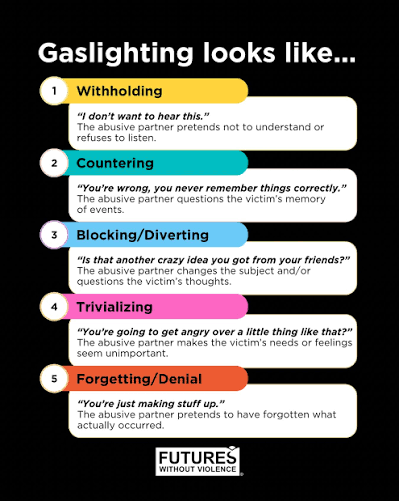
Gaslighting is a form of emotional manipulation that repeatedly causes someone to question their own feelings, instincts, memories, or understanding of reality. Instead of simply disagreeing with your version of events, the other person gradually weakens your confidence in your ability to know what happened at all.
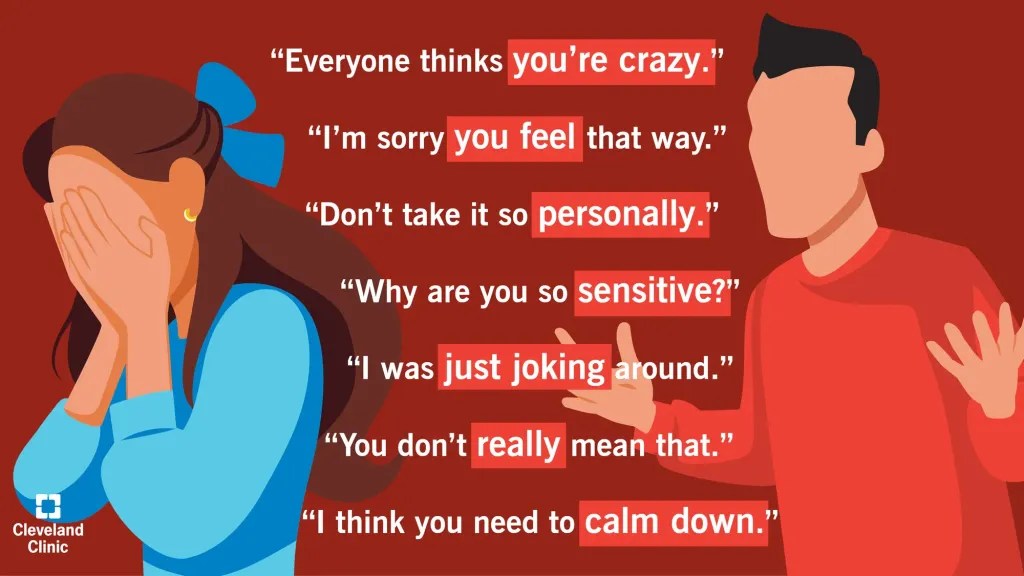
It can sound like:
“That never happened.”
“You are remembering it completely wrong.”
“You always exaggerate.”
“You’re just being paranoid.”
It can also be less direct. Someone may repeatedly change the subject, trivialize your feelings, or conveniently “forget” conversations and promises.
One of the clearest examples from my own life involved someone I loved who had very real anxiety but was also addicted to the benzodiazepines he had been prescribed.
He knew he could not safely manage the medication himself, so he asked me to keep it and dispense it to him. I carried the pills in my pockets, hid them in different places, and kept them in locked safes. But it did not matter where I put them. He would find them and take them.
Every time pills disappeared, he convinced me that I had misplaced them. He was extremely convincing, and eventually I started believing him—or at least part of me did not want to believe the truth.
This continued for months while my mental health was declining extremely fast. COVID had hit, we were stuck at home, and I was already struggling emotionally. The more overwhelmed I became, the less I trusted myself.
I began wondering whether I was becoming forgetful, counting incorrectly, or repeatedly losing his medication without realizing it….. somehow. It starts to make you feel like you are losing your mind, because you kept them hidden and locked so well, how could he have gotten to them? But us addicts find our ways when we are motivated.
Eventually, I started counting the pills closely enough that the truth became impossible to deny. He had been finding them, taking them, and then convincing me that I was responsible for their disappearance. Even when I knew what was happening, he continued to deny it.
His anxiety was real but his addiction was vicious. It was a double-sided sword. I understand that addiction can drive someone to act desperately and dishonestly but understanding why he did it does not change what happened. He was not simply lying about taking the pills. He repeatedly convinced me that my own memory could not be trusted.
That is a strong and extreme example of gaslighting.
The difference between gaslighting and an ordinary disagreement is the repeated pattern and its effect. With gaslighting, evidence is dismissed, the story changes whenever necessary, and the other person gradually begins doubting their own perception.
Eventually, you may no longer need someone else to tell you that you remembered it wrong because you automatically begin telling yourself that.
“Gaslighting is implanted narratives cloaked in secrecy.”
– Tracy Malone
Manipulation Can Take Many Forms
Manipulation is not always obvious. Some of its most effective forms may sound like concern, disappointment, helplessness, love, or even an apology.
One common form is blame-shifting. You try to address something the other person did, but the conversation quickly becomes about your reaction. Instead of discussing their lie, insult, threat, or betrayal, you are suddenly defending your tone, your anger, or something you did months ago.
“I would not have done that if you had not pushed me.”
“You are the one yelling right now.”
“You have hurt me too.”
Your behavior may deserve its own honest conversation. Bringing up your mistakes, however, does not erase theirs.
Manipulation can also use guilt:
“After everything I have done for you…”
“If you really loved me, you would…”
“Fine. I guess I am just a terrible person.”
That last one can be especially effective. Instead of taking responsibility, the person becomes so devastated by being confronted that you end up comforting them. Then original problem disappears. And in some cases, the person may not even realize they are manipulating the situation, but rather a learned response.
Other tactics include changing the subject, minimizing what happened, withholding affection, using silence as punishment, threatening consequences, or making you responsible for their emotions.
Control may even be presented as concern:
“I only check your location because I worry about you.”
“I do not want you around them because they are a bad influence.”
“I am only trying to protect you.”
And there is often an excuse.
They were stressed.
They were drunk.
They had a difficult childhood.
They were struggling with their mental health.
They are struggling with addiction and staying sober.
They didn’t mean it; they had a hard day.
Basically, you should have known when to leave them alone.
Those circumstances may provide context, but context is not accountability.
Someone’s trauma, addiction, mental health, or painful past may help explain why they behave in certain ways. It does not mean the people around them are required to accept being lied to, threatened, controlled, intimidated, or emotionally harmed.
Manipulation may also target the parts of you that are already vulnerable. Someone might use your trauma, anxiety, addiction history, diagnosis, memory problems, or past mistakes to discredit you.
“You always use your anxiety as an excuse.”
“You were drinking back then, so how would you know?”
“Your trauma makes you see everything as abuse.”
“No one will believe you because of your past.”
“Your acting crazy.”
According to the same national CDC survey, 27.2 percent of women and 19.5 percent of men reported experiencing coercive control or entrapment from an intimate partner. This includes behaviors such as monitoring someone’s whereabouts, isolating them from family or friends, controlling their money, making personal decisions for them, threatening harm, and destroying things that matter to them.
Not every guilt trip, defensive response, period of silence, or bad apology automatically creates an abusive relationship. The concern is when these tactics repeatedly work together to control the outcome, escape accountability, and keep another person emotionally off balance.
The method may change, but the result often stays the same:
Their behavior receives an explanation, while your reaction receives the blame.
“Gaslighting is mind control to make victims doubt their reality.”
– Tracy Malone
Why It Is So Hard to Recognize
Abuse would be easier to recognize if abusive people were cruel every moment of every day.
Usually, they are not.
The same person who hurts you may also make you laugh, support you during difficult moments, apologize, give thoughtful gifts, or remind you of the person you first trusted. There may be long periods when everything feels normal.
Those good moments are real memories, which is exactly why the harmful ones can be so difficult to understand.
You may focus on the person’s potential. You may believe their explanation because you know what they have survived. You may convince yourself that the relationship can return to what it once was if you are patient enough, loving enough, calm enough, or forgiving enough.
Sometimes the gradual development of control is part of a grooming process. A person may build trust, test small boundaries, create dependence, discourage outside relationships, or slowly normalize behavior that would have seemed unacceptable in the beginning. By the time the manipulation becomes obvious, the person experiencing it may already feel deeply attached, responsible for the other person, or unsure of what is normal.
Grooming is a much larger subject than I can fully explain here. I plan to write a future article that goes further into the brain science, boundary testing, gradual control, dependence, isolation, and the way harmful behavior can slowly become normalized.
A person also does not have to create a detailed plan for every manipulative behavior to become abusive. Some people repeat patterns they learned growing up. Some truly believe they are the victim in every conflict. Some have avoided accountability for so long that changing the story seems automatic.
That may help explain the behavior. It does not erase its impact.
“Gaslighting chips away at self-esteem, leaving individuals feeling utterly worthless.”
– Gwenn Eyer
How It Changes You
Repeated manipulation does not only affect individual arguments. Over time, it can change how you think, communicate, and make decisions.
You may rehearse conversations, searching for words that cannot possibly be misunderstood or twisted. You may explain the same point ten different ways because you still believe clarity will eventually lead to accountability.
I have spent far too much time doing that.
I have replayed conversations, questioned whether I used the wrong tone, and wondered whether I could have explained myself more calmly. I have felt as though I needed examples, screenshots, messages, or another person’s confirmation before I was allowed to trust what I remembered.
You may start saving everything—not because you want to build a case against someone, but because you are tired of being told conversations never happened.
You may ask trusted people, “Does this sound wrong to you?” because your own judgment no longer feels like enough.
You may apologize constantly, avoid certain subjects, soften every sentence, or take responsibility for things you did not cause because accepting the blame feels easier than continuing the argument.
You may also become hyperaware of the other person’s mood. You notice changes in their voice, facial expression, footsteps, or messages. You learn when it feels safe to speak and when it is better to stay quiet.
What looks like being overly sensitive from the outside may actually be a nervous system trying to predict danger.
Emotional abuse can slowly wear down a person’s confidence, self-worth, and emotional strength. It may leave someone confused, anxious, isolated, and increasingly dependent on the abusive person to define what is real.
Eventually, you may begin believing the labels used against you:
Dramatic.
Difficult.
Crazy.
Unstable.
Ungrateful.
Selfish
The most damaging part may not be that someone else called you those things. It may be that, after hearing them often enough, you started using those words to describe yourself.
“Accountability is the glue that binds commitment to the result.”
— Bob Proctor
Accountability Is Not Abuse
Gaslighting and manipulation are serious terms and using them accurately matters.
Someone disagreeing with you is not gaslighting. Being corrected is not emotional abuse. A boundary you dislike is not necessarily control. Two people can genuinely remember an event differently, and someone can tell you that your behavior hurt them without manipulating you.
I have also experienced the opposite of gaslighting—an argument where two people genuinely remembered what happened differently.
During a particularly bad argument, I was completely certain the situation had happened one way, while the other person was just as certain it had happened another way. Fortunately, we had a way to confirm what actually happened. When we looked at the evidence, it became clear that I did remember it correctly.
However, the look on his face said everything. He was not angry that he had been proven wrong and he did not try to deny what we could both see. He was genuinely hurt by the realization that he could remember the situation so differently and had become so frustrated with me over something he believed had happened a certain way. It was something he didn’t understand but I think a lot of us can probably relate with.
It affected him enough that he went to a doctor to discuss his anxiety. That was not gaslighting. He had not been trying to confuse me or make me distrust myself. He genuinely remembered an emotionally intense situation differently.
Sometimes people misunderstand each other. Sometimes anxiety, stress, fear, or being extremely upset can affect how someone processes and remembers an argument.
The difference is what happens when the truth becomes clear.
A person who is gaslighting may deny the evidence, change the story, attack your credibility, or find another way to make you responsible.
Someone who made an honest mistake can acknowledge it, care about its impact, and take steps to understand why it happened.
A person experiencing abuse can also react in unhealthy ways. They may yell, insult someone, shut down, lie to avoid conflict, or say things they later regret. Those actions can still require accountability. Taking responsibility for your reaction, however, does not make you responsible for the abuse that preceded it.
There is a difference between saying:
“I should not have spoken to you that way.”
And accepting:
“You treated me that way because I made you.”
In a healthy relationship, accountability does not travel in only one direction. Both people can speak. Both people’s experiences matter. Apologies are specific and followed by effort and change.
In an abusive dynamic, one person’s mistakes are repeatedly used to erase the other person’s pattern of control. The focus shifts away from what caused the conflict and onto the victim’s reaction to it.
You can regret how you responded and still tell the truth about what happened to you.
You can acknowledge that you yelled, became defensive, said something hurtful, or handled a situation badly without accepting responsibility for another person’s lies, threats, manipulation, or abuse.
Both things can be true. You can be accountable for your behavior without carrying the blame for theirs.
“The moment you accept your own reality, the manipulator loses their power.”
— Unknown
Trusting Yourself Again
Learning to trust yourself again does not always begin with understanding every incident perfectly.
It may begin with noticing the pattern.
How do conversations usually end?
How do arguments usually begin?
Who apologizes?
Whose feelings receive attention?
Who is allowed to be angry?
Does the story change when evidence appears?
Do apologies lead to real change, or do they simply reset the cycle until it happens again?
Writing things down can help, when it is safe, if the abuse has reached an extreme level. So can talking to someone trustworthy who is not emotionally invested in protecting the other person.
A trauma-informed counselor or domestic violence advocate may help you identify patterns that have become difficult to see from inside the relationship.
You also do not have to win every argument before you are allowed to protect yourself.
Some people will never agree with your experience because doing so would require them to confront what they did. You can spend years collecting proof for someone who has already decided that no amount of proof will count.
At some point, healing may require you to stop placing your reality on trial.
That does not mean believing you are always right.
It means accepting that your feelings, memories, and instincts deserve consideration.
It means learning the difference between healthy self-reflection and automatically assuming that you caused every conflict.
Trusting yourself can feel uncomfortable when you have been taught that boundaries are cruel, distance is punishment, or telling the truth is betrayal. But protecting yourself is not the same as abusing someone.
You are allowed to notice patterns.
You are allowed to take emotional and psychological harm seriously.
You are allowed to stop participating in conversations that only exist to confuse, exhaust, or silence you.
You are allowed to trust your own reality again.
Thanks for reading.
Until next week, keep healing, keep growing, and keep telling your truth! 💜
“Healing doesn’t mean the damage never existed. It means the damage no longer controls our lives.”
— Akbar Aly Khan
References
Centers for Disease Control and Prevention. The National Intimate Partner and Sexual Violence Survey: 2023/2024 Intimate Partner Violence Data Brief.
Centers for Disease Control and Prevention. About Intimate Partner Violence.
The National Domestic Violence Hotline. What Is Gaslighting?
The National Domestic Violence Hotline. What Is Emotional Abuse?
The National Domestic Violence Hotline. Power and Control.
The National Domestic Violence Hotline. Mutual Abuse: It’s Not Real.
Australian Institute of Family Studies. What the Research Evidence Tells Us About Coercive Control Victimisation.
Sexual Violence Research Initiative. Grooming for Domestic Abuse: From Romance to Isolation.
U.S. Department of Justice. The Reporting of Domestic Violence and Sexual Assault by Nonstrangers to the Police.
Leave a Reply! I would love to hear your thoughts on todays topic!