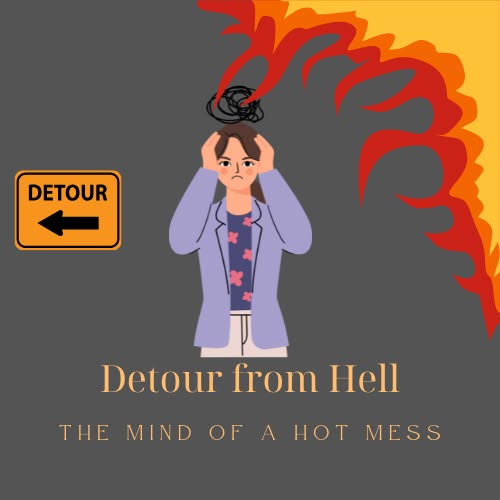
Content Warning: This article discusses addiction, recovery, trauma, withdrawal, abuse, and relationships affected by substance use. Please read with care. 💜


“Our liquor was but a symptom. So we had to get down to causes and conditions.”
– Alcoholics Anonymous
Getting sober is hard.
Really fucking hard.
Depending on the substance, it can mean withdrawal, cravings, anxiety, depression, sleepless nights, rebuilding routines, changing friendships, facing consequences, and learning how to live an ordinary Tuesday without reaching for the thing that used to make everything quieter.
For some people, getting sober is literally a fight for their life.
I know it was for me.
That deserves to be acknowledged.
But there is another part of recovery that I don’t think we talk about nearly enough:
Stopping the substance and recovering are not always the same thing.
Sobriety doesn’t automatically teach someone how to communicate, create accountability, or heal trauma.
And getting sober does not suddenly remove all of our character defects, as they would say in the program.
Anger, unhealthy relationship patterns, dishonesty, manipulation, defensiveness, or other behaviors that existed during—or even before—the addiction can still be there.
A person can be sober and still explode when they’re angry.
They can still become abusive when someone tells them something they don’t want to hear, questions their behavior, sets a boundary, or simply doesn’t accept what they’re saying.
That doesn’t take away from the accomplishment of getting sober.
It just means sobriety and personal growth are not necessarily the same thing.
“The good life is a process, not a state of being. It is a direction not a destination.”
— Carl Rogers
The Substance May Be Gone. The Person Is Still There
When someone has been using for years, so much attention naturally goes toward the substance.
They need to stop drinking.
They need to stop using.
They need to get sober.
And yes. Sometimes stopping the substance absolutely has to come first.
But then what?
Once the drugs and alcohol are removed, all of the things underneath them are still there.
Sometimes the substance was covering those things up.
Sometimes it was making them worse.
Sometimes it became the way a person survived feelings they had absolutely no idea how to handle.
And sometimes the unhealthy behaviors existed long before the addiction ever did.
Removing the substance just means the person finally has to work on it. Recovery Has to Become More Than Abstinence
I want to be careful here, because abstinence can be an enormous accomplishment.
My body had gotten to the point where alcohol wasn’t just something I wanted but I was physically dependent on it.
And unless you’ve actually been through detox or withdrawl, I think it can be really difficult to understand just how awful it can feel.
For me, it was the combination of the physical symptoms—nausea, shaking, sweating, hallucinations, not being able to sleep, and everything else happening in my body—mixed with everything happening emotionally at the same time.
There were moments when it genuinely felt like I was crawling out of my own skin.
It wasn’t necessarily pain.
It was this overwhelming physical discomfort where your body feels wrong, your brain feels wrong, and you cannot get comfortable. And when you’re going through that alone, it can feel even more impossible.
Some forms of withdrawal can also be medically dangerous, so detox is not always something someone should try to power through alone.
I will never minimize what it takes to get through that part.
But once I was sober, I learned something else:
– Alcohol had very little to do with the things I actually needed to work on and getting sober didn’t really fix much initially.
It didn’t erase my trauma.
It didn’t fix my anxiety.
It didn’t teach me how to communicate.
It didn’t change every unhealthy coping mechanism I had developed.
Those things were still there whether I was drinking or not.
Sobriety meant I finally had to start dealing with them without alcohol getting in the way.
That’s where recovery really began.
“Not everything that is faced can be changed; but nothing can be changed until it is faced.”
— James Baldwin
Recovery Didn’t Make Me Perfect (Obviously)
I am absolutely not writing this from some pedestal where I have everything figured out.
I don’t!!!
I still lose my temper sometimes.
I still say things wrong.
I still react emotionally.
I still get defensive.
I still overthink almost everything in my life way too much.
And I still have moments when I look back at something I said or did and think…. well, Ashley, that could have gone better…..
Recovery did not turn me into a perfect person. That was never the point. What changed was what I try to do afterward.
When I realize I’ve hurt someone, I try to own it.
When I’m wrong, I try to admit it.
When I owe someone an apology, I try to give one without attaching a list of reasons why they should excuse what I did.
Do I always get that right? Absolutely not.
Sometimes it takes me longer than it should to realize I’m wrong. Sometimes someone else has to point it out.
And sometimes I know I need to apologize, but I honestly don’t know how yet.
I need time to calm down, figure out what I’m actually trying to say, and make sure the apology isn’t just more defensiveness disguised as an apology.
But I come back to it. To me, that’s a huge part of recovery.
“The process of recovery is highly personal and occurs via many pathways.”
— SAMHSA
There Isn’t Only One Way to Recover
My own recovery has included inpatient treatment a couple of times, followed by 6 months in sober living, years in the rooms, and working the Twelve Steps for a few years (until I moved to AR where recovery is totally different).
Those experiences taught me a lot that had very little to do with alcohol itself.
Honesty.
Looking at my own behavior.
Recognizing where I’ve caused harm.
Making amends.
Admitting when I’m wrong.
Trying not to repeat the same shit over and over while expecting everybody around me to keep forgiving it.
And continuing to work on myself even when nobody’s standing there to notice it.
But my recovery wasn’t some perfectly straight line. Far from it.
“Resentment is the ‘number one’ offender.”
— Alcoholics Anonymous
After my first nine months sober in 2019, I stopped going to meetings because I had developed a resentment.
Which is pretty ironic considering how much AA talks about resentment being one of the biggest things that can take us down in recovery. But that’s exactly what I did.
I walked away from the rooms and eventually became what people in recovery sometimes call a dry drunk. I used a few times over the next year and a half, but for the most part I wasn’t drinking the way I had before.
And yes, I was still absolutely miserable.
I wasn’t going to counseling.
I wasn’t working on improving my life.
Arguments still looked like they always have.
My reactions still looked like they used to.
I remember one argument with Dustin where he called me a psychopath.
He had never said anything like that to me before.
And instead of immediately getting mad about the word, something about the way he said it made me stop and look at myself like, Jesus Christ. Okay. Ripping that dog fence apart was maybe a little extra.
It absolutely was.
That reaction had become so normal to me that I didn’t even recognize how over-the-top it was anymore. That moment didn’t magically change everything, but it was one of the moments when I started paying more attention to the way I responded when I was angry.
That period also happened during COVID, when everything already felt isolated and upside down. I was living in an unhealthy situation where both of us were struggling in different ways, and we were feeding off each other’s toxicity.
I spent a lot of that time lying on my couch completely miserable.
Looking back, that period taught me something important:
I could stay away from alcohol and still be miserable if I wasn’t doing anything to actually improve my life.
For me, I needed structure, counseling, other people, and actual work on myself. After that dry-drunk period, I thought I would probably have to stay in the meeting halls forever if I wanted to stay sober.
But then I decided to move to Arkansas with full intentions of finding a home hall. But unfortunately, the accessibility to meetings and times are much more scarce than Wichita — we had it made in Wichita when it came to recovery.
But I eventually learned that I absolutely could stay sober without constantly being in the rooms. The difference was that this time, my feet were planted a hell of a lot more firmly before I stepped away.
The first time I left, I didn’t have enough healthy coping skills or stability underneath me yet.
Later, after years of recovery, counseling, working the steps, and learning myself better…. it was much different.
And stepping away from regular meetings didn’t mean throwing away everything I learned there.
I still use the principles.
I still use the tools.
I still have people from recovery I can reach out to when I need them.
Those things became part of my life, not something that only existed inside a meeting hall. Plus I am now with someone that is not an addict like me. He can go months without a drink and would never knowingly let me drink. He supports my recovery more than anyone.
That experience is a big reason I don’t believe there is only one way to recover.
Do I think everybody has to recover the way I did?
Absolutely not. I don’t believe that’s true at all. Everyone is different. I promise sober houses are not for everyone lol.
And the Twelve Steps might not be for everybody.
Treatment isn’t going to look the same for everybody.
Some people find recovery through twelve-step programs. Some use therapy, medication, peer support, treatment, faith, family, community, exercise, changing their environment, or some combination of all of it.
And some people create a path that doesn’t fit neatly into any of those categories.
Everybody has their own way.
I do think having some kind of structure can make an incredibly difficult process more manageable, especially in the beginning.
But the important part isn’t whether someone recovered the “right” way.
I believe it’s whether what they’re doing is actually helping them build a healthier life.
“The chaos hasn’t disappeared—it’s just changed shape.”
— Party Wreckers
Being in Recovery Doesn’t Give You a Pass to Hurt People
Trauma, addiction, withdrawal, mental health struggles, and survival responses can help explain why someone reacts the way they do. But explanation and permission are not the same thing.
Someone doesn’t get to scream at another person, intimidate them, threaten them, manipulate them, or become abusive because they heard something they didn’t like.
And boundaries still matter.
I learned that in a very personal way with my own father.
When I came out of treatment, I set a boundary that I needed him to be sober for two years before I was willing to have a relationship with him again. I know it seemed like a big ask. I knew it was for him.
But at that point in my recovery, it was what I needed to be around him. He responded to that boundary in a violent way, and that ultimately led to me getting a protective order.
For me, the protective order was largely about making it clear that I was serious this time.
I wasn’t willing to keep accepting that kind of behavior anymore.
Understanding why someone behaves the way they do does not mean another person has to keep accepting that behavior.
You can love someone and still have a boundary.
You can understand where their pain comes from and still say, you cannot treat me this way.
You can have compassion for someone and still decide that having them in your life is no longer healthy or safe for you.
Your pain does not give you permission to keep hurting everybody around you.
“Requiring accountability while also extending your compassion is not the easiest course of action, but it is the most humane.”
— Brené Brown
Accountability and Compassion Can Exist Together
Compassion and accountability don’t have to compete with each other. We can understand that trauma affects behavior and that addiction can affect the way someone thinks, reacts, communicates, and makes decisions.
We can recognize that someone may have been hurting, scared, sick, or doing the best they knew how to do at the time.
And we can still acknowledge when harm was done.
Understanding where a behavior came from doesn’t mean pretending it didn’t have an impact. Shame doesn’t usually help people become healthier. Constantly reminding someone of everything they’ve ever done wrong doesn’t leave much room to grow either.
People deserve grace and the opportunity to grow and change.
But accountability is part of that growth.
For me, that means being willing to look honestly at how I responded to things and how my actions may have affected other people. Sometimes there is a very understandable reason I reacted a certain way
.
That doesn’t mean there isn’t anything for me to learn from it.
I can say, I understand why I reacted that way, while also asking, What can I do differently next time? Plus I am now with someone that is not an addict like me. He can go months without a drink and would never knowingly let me drink. He supports my recovery more than anyone. And the few times I started my toxic behavior and he called me on it, I stepped back and looked at it, and realized how uncalled for and extra it was. There no other word I can think of to describe it…. just super extra.
That’s where compassion and accountability work together.
“You can remain compassionate and connected while still maintaining clear expectations and healthy boundaries.”
— Hazelden Betty Ford
Making Amends Doesn’t Guarantee Forgiveness
Taking responsibility for something doesn’t mean I get to control what happens afterward.
I can apologize.
I can admit where I was wrong.
I can try to make something right.
But I can’t decide how quickly someone else trusts me again, whether they’re ready to forgive me, or whether everything goes back to normal.
My sponsor has always taught me that expectations can very quickly turn into disappointment and resentment when things don’t go the way we hoped.
Sometimes we apologize hoping the other person will say, It’s okay. We’re good now.
And sometimes they don’t.
Sometimes they need time.
Sometimes the relationship changes.
Sometimes forgiveness doesn’t come at all.
That doesn’t mean the apology wasn’t worth giving.
Part of making amends is doing the right thing because it is the right thing to do—not because I am guaranteed a certain response in return.
And changed behavior matters. An apology can be meaningful, but if the same thing keeps happening over and over, the words eventually stop carrying much weight.
That doesn’t mean perfection. It means effort, recognizing patterns, and trying to respond differently the next time.
Sometimes it takes me time to come back to something because I genuinely don’t know how to apologize yet.
But I don’t want pride, embarrassment, or discomfort to be the reason I never address it.
For me, that’s part of recovery too.
“Recovery is a process of change through which individuals improve their health and wellness, live self-directed lives, and strive to reach their full potential.”
— SAMHSA
“Recovery is a process of change through which individuals improve their health and wellness, live self-directed lives, and strive to reach their full potential.”
— SAMHSA
So What Does Recovery Actually Mean?
I don’t think recovery has one definition.
I don’t think it looks the same for everybody.
And I don’t think recovery is defined by whether someone goes to meetings, works a program, follows a specific path, or by how many days, months, or years they’ve gone without using a substance.
For me, sobriety is part of recovery. A huge part obviously.
But recovery has had to become much bigger than that.
It’s learning how to sit with uncomfortable feelings instead of immediately trying to shut them off.
It’s recognizing my own patterns.
It’s learning how to communicate better.
It’s learning how to apologize.
It’s learning how to admit when I’m wrong.
It’s learning how to set boundaries—and respect other people’s boundaries too.
It’s learning how to understand the ways my past still affects me without letting it control what I do next.
I will always have things I need to work on.
But I’m willing to look at those things now.
I’m willing to ask myself whether I handled something the way I should have.
I’m willing to go back and try to make something right when I know I didn’t.
And I’m willing to keep learning.
To me, recovery isn’t about becoming a completely different person. It’s about becoming more honest about the person I already am.
The good parts.
The ugly parts.
The parts I’m proud of.
And the parts that still need a hell of a lot of work.
Getting sober gave me the chance to live.
But I didn’t fight that hard just to stay alive and keep being the exact same person I was before.
Recovery, for me, is what I choose to do with the life I fought so hard to keep. I’m never going to get all of it right.
But I can keep trying to own my shit, right my wrongs when I can, learn from the ones I can’t undo, and hopefully be a little better than I was before.
And when it really comes down to it, I think that’s what recovery is about for me:
Trying to be a better person in general.
Not better than anyone else.
Just continuing to grow, learn, and become a better version of myself.
And that shit is a forever ongoing process.
Maybe that’s what recovery really is.
Not perfection.
Not a meeting or day count.
Not a chip.
Not proving anything to anybody else.
Just continuing to do the work—even when nobody’s standing there to notice it.
Thanks for reading! Until next week, keep healing, keep growing, and keep telling your truth! 💜
Leave a Reply! I would love to hear your thoughts on todays topic!